
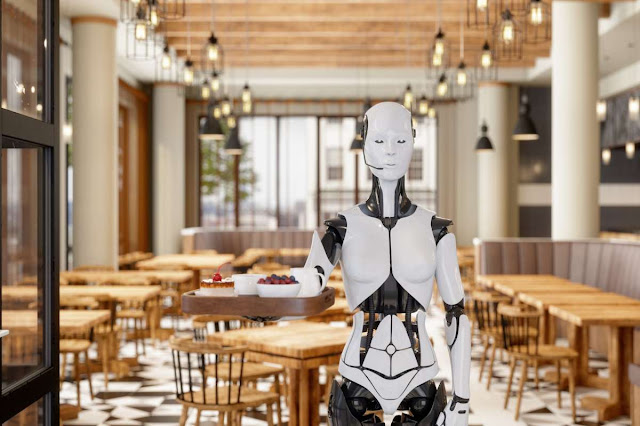
Robotic service is one of the trends that the COVID-19 pandemic accelerated. The demand for AI-powered automatic services comes from both consumers and businesses.
Consumers get used to automatic services
Many restaurant chains and (food) retail businesses have already rolled out contactless self-service through mobile apps, kiosks, and facial/palm recognition technology. When the lockdown was in place, restaurant and foodservice facilities only operated for pickup or delivery services. Many consumers tried curbside pickup and delivery service of their favorite eateries for the first time because of the lockdown. During the pandemic, the delivery business was one of the few sectors that got a boost.
Now that consumers have experienced the convenience of contactless self-service, they may continue using it in future purchases. As machines, instead of real human beings, often perform those automatic services, it is safe to predict that machines will soon replace more foodservice workers.
Businesses prefer robotics over workers
The foodservice industry quickly responded to the increasing demand for contactless self-service. Restaurants introduced new store designs with double- or even triple-drive-thru lanes, conveyor belt delivery, and food lockers for pickup orders. In some cases, restaurants got rid of the dining rooms and focused solely on delivery and pickup services. In June 2021, McDonald’s started testing AI-powered drive-thru service at 10 Chicago restaurants, where machines, but not workers, took orders from consumers.
Besides meeting consumers’ demand for automatic service, the labor shortage challenge facing the industry and the rising labor costs are two other factors pushing the hospitality industry to go after machines instead of real human beings. The bottom-line is machines can work around the clock without asking for overtime pay or sick leaves. We have already seen burger-flipping robots, robotic baristas, robotic woks, delivery robots, and more in various foodservice facilities.
So, the question is not about whether machines will replace foodservice workers. Instead, we shall think about what positions will be substituted and how soon robots will take over those jobs.
Note: This article was published in the Hospitality News (magazine) in November 2021; The picture was downloaded from CHRON.com.
This comment has been removed by the author.
ReplyDeleteAs a hospitality major student, it is depressing hearing about robot substitution in hospitality field. I cannot deny the fact that the technology of the contactless self-service is developing and convenient for both customers and businesses. I have worked at the restaurant that offers the contactless self-service delivery app; I really did not like how it works. I made more mistakes with it because it made more complicated the work. For example, once the customer orders, the app automatically gave the estimate time. When we got busier than normal, the customer came early and complained because of the delayed order. I believe human can handle the situations like this, not the robots. I do agree with you that business who prefers the automatic service because of labor costs. How can we encourage the society that human work can increase the business over the robotic work?
ReplyDeleteGood point. Machines can "learn" over time though. We shall see.
DeleteHey friend, it is very well written article, thank you for the valuable and useful information you provide in this post. Keep up the good work! FYI, Pet Care adda
ReplyDeleteCredit card processing, wimpy kid books free
,Essay About Trip With Family
In recognizing the inevitability of robots and machines replacing human workers in many different hospitality operations, there are many pros and cons of robots and the service they give in comparison to that or human servers. The most common position that robots serve in the foodservice industry is cashier. Within this position, they provide for efficient ordering as guests simply need to select their items on their own and can then proceed to the payment process quickly as well. However, this experience is much less memorable for the guest and can risk a higher possibility that a customer does not return because their sole experience with the operation would be based on the product, since there was not much interaction to consider the entire service as a part of their experience.
ReplyDelete