
Many of us have more than one social media accounts, but not everyone is interested in measuring how much influence a person has on social media. Even for those who are interested, they may not necessarily know how to measure their impact.
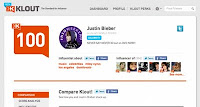 This summer, I discovered a tool called “Klout,” which reports a person’s or an organization’s influence on major social media sites. It looks at the factors like how many friends and followers a user has, how many friends and follower a user can truly reach, and what attention and reactions a user can get from his/her/its friends and followers. “Klout” rewards those true influencers with a variety of “perks” according to the topic(s) of their influence.
Marketers will LOVE “Klout” because they see the opportunity of amplifying those top influencers’ power on social media. I am not a marketer; but I am active on social media, and I do research on social media. Despite the fact that I am not able to evaluate the scales used by “Klout” for its reliability and validity, I have found this tool very helpful in motivating me to actively engage with my friends and followers --- the more I communicate with my friends and followers on social media, the higher “Klout” score I receive. Engaging the audience --- that is what social media is about, isn’t it?
If you have one or more personal accounts on social media, do you care what your influence is? How do you measure your influence in your network?
If you are managing one or some social media accounts for your company or organization, what scales do you use to measure the “effectiveness” of the social media tools?
The ABC News Report about Klout
The MSNBC News Report about Klout
References:
The picture was downloaded from AdWeek.com.

Marketers will LOVE “Klout” because they see the opportunity of amplifying those top influencers’ power on social media. I am not a marketer; but I am active on social media, and I do research on social media. Despite the fact that I am not able to evaluate the scales used by “Klout” for its reliability and validity, I have found this tool very helpful in motivating me to actively engage with my friends and followers --- the more I communicate with my friends and followers on social media, the higher “Klout” score I receive. Engaging the audience --- that is what social media is about, isn’t it?
If you have one or more personal accounts on social media, do you care what your influence is? How do you measure your influence in your network?
If you are managing one or some social media accounts for your company or organization, what scales do you use to measure the “effectiveness” of the social media tools?
The ABC News Report about Klout

The MSNBC News Report about Klout
References:
The picture was downloaded from AdWeek.com.
I was one of the last of my friends to get a facebook page, and I was reluctant to sign up at all. Now, I realize the great benefit it has for connecting friends and relatives across the country. I do not have a big interest in finding out what my influence is online, but I can see where it would be helpful for many companies and professionals. I don’t really measure my influence in a network, as I use the social media site mainly for enjoyment rather than for business. I know there are other professional specific sites that provide similar services.
ReplyDeleteAlthough I do not post things often online, I sometimes post the location and time of the fitness or dance class I will be teaching that night. This is helpful if my friends want to come, or if anyone else has interest. I do not broadcast past my friends/relatives and the location where I teach, but social media would be a great way to advertise more if I chose to. Class turnout and new students joining the class would prove the effectiveness of the media tools. I have seen many other people advertise in this manner with excellent results.
Thank you, Lindsey. I am also relatively new to social media. I started using social media in Jan 2010, but I fell in love with this powerful tool. :)
ReplyDelete